An increasing number of dog-owners in rural Bedfordshire are reporting attacks by Chinese water deer, whose ancestors escaped Woburn Safari Park.
Although the deer are less than 2ft tall and weigh a maximum of 31lb, the males have a secret weapon - downward-pointing fangs which can grow more than 3in long.
The Chinese water deer population had sprung up since they began to escape in the 1920s and 1930s. They breed throughout the year and are quite a menace. You don't normally see them except at dusk because they lie down during day as their natural coloring camouflages them in the long grass.

The UK is now estimated to be home to a quarter of the world's Chinese water deer population.
Latest victim was Perdita, a six-year-old Jack Russell out for a walk with Georgina Robey, 12, and her ten year old brother Daniel. Perdita suffered cuts on her back, neck and both sides of her stomach after an encounter with a
Source

Just as they were when Rachel Carson published '
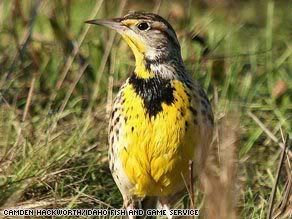
Silent Spring' nearly 50 years ago, birds today are a bellwether of the health of land, water and ecosystems.
From shorebirds in New England to warblers in Michigan to songbirds in Hawaii, we are seeing disturbing downward population trends that should set off environmental alarm bells.
The declines can be traced to a variety of factors, depending on a bird's particular habitat. But the causes most frequently cited in the report are agriculture, climate change, development and energy, and invasive species.
Source

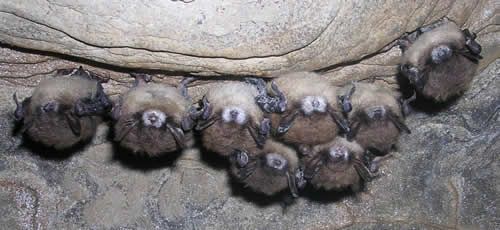
The white fungus that appears on bats' noses and wings — so-called white-nose syndrome — has killed more than a half-million bats over the past three winters, but scientists had not been able to figure out how the fungus got into the bat caves and why it spread.
Now, they have big clue: Humans, specifically cavers, who "may be spreading the causative agent."
SourcePhoto Credit: Nancy Heaslip, New York Dept. of Environmental Conservation
Little brown bats with white-nose syndrome, New York

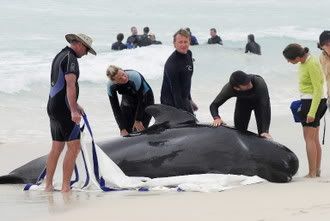
More than 60 whales are dead and 17 remain stranded after beaching themselves on Western Australia's southwest coast.
More than 100 volunteers were desperately trying to keep the animals in a group because if they were sent into the ocean on their own, they could return to beach themselves after hearing the distress calls of other whales.
Mass strandings of long-finned pilot whales on Australian coasts have occurred on average once a year since 1970.
Earlier this month, on King Island, northwest of Tasmania, more than 140 pilot whales died after nearly 200 beached themselves on the coast.
A DEC spokeswoman said what caused the animals to strand themselves was a mystery that would be investigated.
SourcePhoto credit: Steve Mitchell, AP
 You would think that we would have learned from past disastrous attempts to try to manipulate Mother Nature.
Alaska has now begun wolf killings to boost caribou for hunters.
The Alaska Department of Fish and Game, aiming to boost the survival of caribou calves, wants to kill up to 328 wolves, leaving behind 88 to 103. Killing them, state officials say, will allow the Fortymile caribou herd, ravaged by three years of bad weather and heavy snow, to expand from its current level of 40,000 animals to as many as 100,000.
The predator control effort has run into opposition from the National Park Service who argues that there aren't nearly as many wolves as state officials estimate, and that killing so many could devastate the packs. Also, the park service says that the Fortymile herd hasn't approached 100,000 since the early 1900s.
Wolves in other parts of the West, meanwhile, are also about to come into the gun sights, after the Obama administration's decision this month to let stand the removal of endangered-species protections for wolves in the Upper Midwest, Idaho and Montana.
SourceHere are a few lessons we should have learned from history:* It is believed that the Sahara Desert has been formed due to the disruption of a food chain. Records point out that in ancient times the Romans captured lions, which resulted in the sharp reduction in the predator population. This in turn resulted in the increase in herbivore population since there was fewer lion to kill them. The increase in the herbivore population led to overgrazing which removed all vegetation. In this manner the Sahara Desert was formed.
* In 1935, a species of toad from Central America was introduced in Queensland (Australia). It was meant to eat beetles that were destroying the sugarcane crop. But not only did the toads eat the beetles, they also ate many other useful and harmless creatures. They ate lizards which help farmers by feeding on insects and also destroyed small frogs which are harmless to crops. Since the toad had no natural predators they multiplied into huge populations which are now destroying the native Australian wild life.
* In Europe, during the middle ages, the cat was considered a symbol of evil. Superstitious people associated the cat with witchcraft and the devil. For this reason, hundreds of thousands of cats were killed. The absence of cats led to a huge increase in the rat population of Europe and contributed to the spread of Bubonic plague. This disease which is transmitted to people by rat fleas killed about a fourth of the people who lived in Europe during the 1300’s.
* Rabbits are not native to Australia. In 1859, 24 wild rabbits were released for hunting purposes. The effect of rabbits on the ecology of Australia has been devastating since this time. Rabbits are suspected of being the most significant known factor in species loss in Australia. Rabbits often kill young trees by destroying their bark. Rabbits are also responsible for serious erosion problems because they eat native plants which leaves the topsoil exposed and vulnerable to sheet, gully and wind erosion.
* In 1960, the mayor of Chicago, Richard J Daley, presented Emperor Akihito (then Crown Prince) with a bluegill fish. It was hoped that the Japanese would learn to love bluegill for dinner as much as Chicagoans do. The emperor donated the fish to research centers, but many escaped to wipe out the royal bitterling and bring other native species to the brink of extinction. They have infested waterways across Japan, including the moat of the imperial palace in Tokyo.
*
The following attempt to "fix Nature" may be the saddest of them all:
Things began to go wrong on Macquarie Island, halfway between Australia and Antarctica, soon after it was discovered in 1810. The island's fur seals, elephant seals and penguins were killed for fur and blubber, but it was the rats and mice that jumped from the sealing ships that started the problem. Cats were quickly introduced to keep the rodents from precious food stores. Rabbits followed some 60 years later, as part of a tradition to leave the animals on islands to give shipwrecked sailors something to eat.
Given easy prey, cats feasted on the hapless rabbits and feline numbers quickly grew. The island then lost two endemic flightless birds, a rail and a parakeet. Meanwhile, the rabbits bred rapidly and nibbled the island's precious vegetation.
By the 1970s, some 130,000 rabbits were causing so much damage that the notorious disease myxomatosis was introduced to Macquarie, which took the rabbit population down to under 20,000 within a decade.
The vegetation began to recover, but what was good for the vegetation proved bad for the island's wildlife. With fewer rabbits around, the established cats turned instead to local burrowing birds. By 1985, conservationists deemed it necessary to shoot the cats.
The last cat was killed in 2000, but the conservationists were horrified to see rabbit populations soar. Myxomatosis failed to keep numbers down, and the newly strong rabbit population quickly reversed decades of vegetation recovery. In 2006, the resurgent rabbits were even blamed for a massive landslip that wiped out much of an important penguin colony.
Scientists say the chain of events at Macquarie is an example of a "trophic cascade", the knock-on effects of changes in one species abundance. The next stage could be an "ecosystem meltdown".
The Tasmanian Parks and Wildlife Service
intends to fix the island once and for all, and has drawn up plans to eradicate all 130,000 rabbits, along with the estimated 36,000 rats and 103,000 mice that live there.
When WILL we learn?

At least 32 new right whale calves -- more than ever recorded -- have been observed this season off the coasts of Georgia and Florida, where the whales migrate to give birth between late November and March. Only about 400 members of the species exist, and the massive mammal is thought to be the most endangered of all the large whales.
Each birth is seen as a miracle of sorts -- a potential key to the survival of a species that has been through many tough years.
Right whales were named by their hunters who once said they were the "right whale" to kill. When they were harpooned, the chubby whales floated to the surface of the water. That made them both profitable and easy to hunt.
Every morning during calving season, volunteers armed with binoculars and whale-related handouts troll up and down the Florida coast -- climbing to balconies and zipping up elevators to the top floors of high-rise condos and retirement communities -- to look for whales.
Source

A synthetic "chemical sex smell" could help rid North America's Great Lakes of a devastating pest, scientists say.
US researchers deployed a laboratory version of a male sea lamprey pheromone to trick ovulating females into swimming upstream into traps.
The sea lamprey, sometimes dubbed the "vampire fish", has parasitised native species of the Great Lakes since its accidental introduction in the 1800s.
The sea lamprey's natural life cycle takes it from birth in a stream to adulthood in the ocean, where it gains its vampirical appellation.
Circular jaws lock on to another, larger fish, and a sharp tongue carves through its scales.
From then on the lamprey feeds on the blood and body fluids of its temporary host, often killing it in the process.
Eventually, the satiated lampreys - both males and females - find a suitable stream to swim up, breed and die.
Unlike salmon, which seek out the stream they were born in, lampreys appear willing to take any stream indicating a suitable breeding place; and perhaps pheromones play a role in identifying streams worth selecting.
Source:
BBC

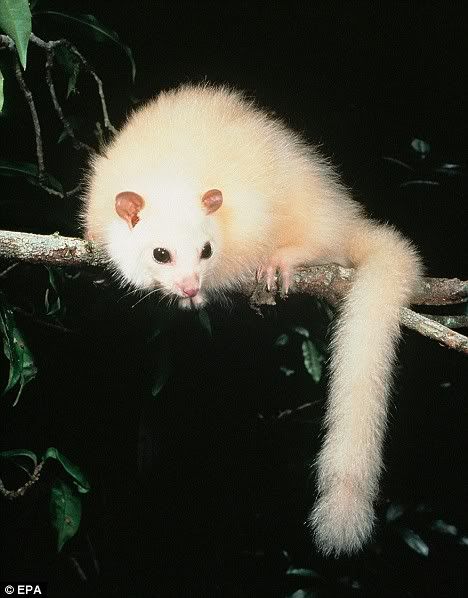
Australia's white possum could be the first creature to die out purely due to climate change.
The rare and timid animals, which normally thrive in the cool temperatures of Daintree forest in Tropical North Queensland, have not been seen for three years despite intensive searches.
Professor Stephen Williams, of James Cook University in Queensland, believes the species has become extinct after temperatures rose by 0.5 degrees.
Just five hours of temperatures over 30 degrees is enough to wipe out the species, which is unable to maintain its body temperature under extreme heat, he claimed.
Source:
Daily Mail

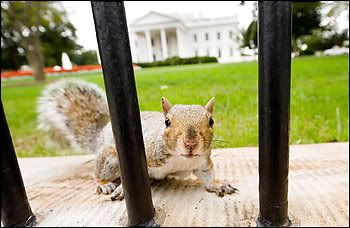
Some Washingtonians love them. Some hate them. But perhaps the prevailing sentiment toward the city's squirrels is indifference. After all, seeing a gray squirrel rushing around downtown as if he has important places to be is about as unusual as seeing a guy in a charcoal suit doing the same.
But it wasn't always that way.
A little more than a century ago, the District's downtown parks and green spaces didn't have a squirrel population to speak of. Eastern gray squirrels are native to this area, but they had been largely wiped out in the most urban parts of town by the late 19th century because of hunting, which wasn't outlawed in much of the city until 1906.
Looking to fill the squirrel vacuum, nature lovers, government officials and other civic-minded residents in the early 1900s pushed to have areas including Lafayette Square, the U.S. Capitol grounds and the Mall stocked with squirrels.
The organized release of gray squirrels into Washington's parks and green spaces is a little-known chapter in the story of the city's development. Even park historians and scientists who have studied the District's squirrel populations weren't aware of these squirrel-stocking endeavors.
Source:
Washington Post(via
corsinet)

On the side of a mountain on the outskirts of Montana’s capital city, loggers are racing against a beetle grub the size of a grain of rice.
From New Mexico to British Columbia, the region’s signature pine forests are succumbing to a huge infestation of mountain pine beetles that are turning a blanket of green forest into a blanket of rust red. Montana has lost a million acres of trees to the beetles, and in northern Colorado and southern Wyoming the situation is worse.
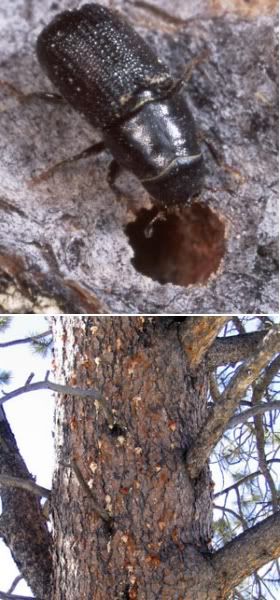
The black, hard-shelled beetle, the size of a fingertip, drills through pine bark and digs a gallery in the wood where it lays its eggs. When the larvae hatch under the bark, they eat the sweet, rich cambium layer that provides nutrients to the tree. They also inject a fungus to stop the tree from moving sap, which could drown the larvae. That fungus stains the wood blue.
“The Latin name is Dendroctunus, which means tree killer,” said Gregg DeNitto, a Forest Service entomologist in Missoula, Mont. “They are very effective.”
Source:
New York Times
According to a 2004 statistic there are only 1,600 pandas left in the wild. It's easier to visualize how few that number really is when you can see them all together in one place:

WWF-France, in celebration of its 35th anniversary, is running a campaign to raise awareness for natural environment preservation by parading 1,600 paper made panda models across the country.
The parade started in July 2008 at Paris City Hall; followed by a few other locations across France
(via
Neatorama)

The red list includes 188 mammals in the highest threat category of critically endangered, including the Iberian lynx (Lynx pardinus), which has a population of just 84-143 adults and has continued to decline due to a shortage of its primary prey, the European rabbit (Oryctolagus cuniculus.)
Nearly a quarter of the world's land mammal species are at risk of extinction, and many others may vanish before they are even known to science, according to a major annual survey of global wildlife
Source:
Guardian

Captured on camera as they swim in a lake, drag pieces of wood to make their dens and play with one another, these are the first beavers to be born in Britain in 400 years.
The enchanting scene is a heartwarming sight for animal lovers as the species was previously extinct in Britain.
The 12 baby beaver ‘kits’ – all from the same mother – were born at the 550-acre Lower Mill Estate near Cirencester, Gloucestershire.
Jeremy Paxton, owner of the estate, brought three pairs of beavers – named Tony and Cherie, Gordon and Sarah and John and Pauline – from Bavaria in 2005.
He has spent almost £1million on the project.
He said: ‘I have always wanted to bring an extinct indigenous species back to Britain.
Source:
The Daily Mail

China's fauna exhibits a unique diversity of apes. Unfortunately, the apes are more seriously endangered by extinction in China than in any other country. A research team assembled by anthropologists of Zurich University now conclude that another ape species has just become extinct in China's Yunnan province.
Science Daily reports that the 14-member scientific team recently carried out a survey in all Chinese forests. They could not locate a single Yunnan white-handed gibbon. The last time this ape was observed in China was in 1988 at the Nangunhe Nature Reserve in south-western Yunnan province. Their loud, melodious calls were last heard in 1992. This subspecies (Hylobates lar yunnanensis) is not known from any other place.
Luckily, these apes are not lost to us forever. Several zoos have included them in their programs. One is the
Honolulu Zoo. On their web page, you can hear the call of the white-handed gibbon:
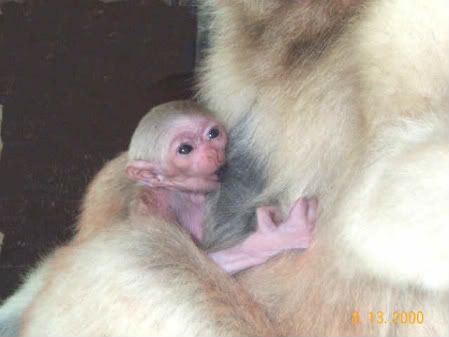
listenYou can also see pictures of Emma, an adorable baby white-handed gibbon, born in 2000. Here's a picture of Emma, 7 hours after birth.


The world’s smallest and rarest pig, which was once feared extinct, is ready to re-enter the wild again.
Pygmy hogs were thought to have been wiped out in the 1960s until two small populations were found in northern Assam in India in 1971. After a 13-year captive breeding program led by Durrell Wildlife, the Jersey-based conservation centre founded by the author Gerald Durrell, the descendants of those surviving hogs are being reintroduced to their natural habitat at the foot of the Himalayas.
The 16 hogs due to return to the wild - taken from a captive population of only 79 - have been kept in large pre-release enclosures that replicate their natural habitat for the past five months and have become progressively shyer, their keepers say. “Up to release date, the hogs have shown naturalistic behavior and an aversion to human contact, which is a positive sign that they will fair well when released.”
Source:
Times Online(via
Boing Boing)

The crazy Rasberry ants are marching! Hundreds, thousands, millions, billions of them are coming in a near-unstoppable zig-zagging insect army intent on making Houston homes, yards and lives a living hill.
First spotted in 2002 in Pasadena by Tom Rasberry, the exterminator for whom the rice-grain-sized insects are named, the ants now have spread through much of the greater Houston area. May through September is their peak period — a time when billions of the critters with a reluctance to sting and a habit of chewing up electrical wiring may infest a single acre. Homeowners daily sweep up dust bins of their dead and maimed.
While they are not prone to stinging humans, the ants do pose potentially serious problems. Ants indirectly can damage plants by establishing a symbiotic relationship with sap-sucking aphids. Ants feed on a sugary aphid excretion called honeydew and, therefore, protect the aphids from predators.
More significantly, crazy Rasberry ants have demonstrated a tendency to nest in and damage electric equipment.
Source:
Houston ChroniclePhoto: Tom Rasberry, an exterminator, lets "crazy rasberry ants," named after him, crawl on his arm in Deer Park.
David J. Phillip: AP
The Interior Department on Wednesday designated the polar bear as threatened with extinction - it has been added to the endangered species list.

Polar bears are the first species to be designated as threatened with extinction because of global warming.
The designation under the Endangered Species Act requires the agency to identify critical habitat to be protected and to form a strategy to assist the bear population's recovery.
Source:
LA Times
Animal Planet has created a great website,
The Animals Save the Planet. It has animated shorts, fun downloads, and suggestions on saving the Earth.
My favorite is the farting cow, Stanley, who teaches that livestock is responsible for 18% of total greenhouse gas emissions.

Stanley suggests saving the planet by eating less meat. Well, of course he would say that, duh!
If you like Stanley too, you can
download a Farting Cow widget.

Whooping cranes have waged a valiant fight against extinction, but federal officials warn of a new potential threat to the endangered birds: wind farms.
Down to about 15 in 1941, the gargantuan birds that migrate each fall from Canada to Texas now number 266, thanks to conservation efforts.
But because wind energy has gained such traction, whooping cranes could again be at risk - either from crashing into the towering wind turbines and transmission lines or because of habitat lost to the wind farms.
"Companies want to put their farms where the best wind is, and that overlaps with the migration corridor of the whooping crane," Tom Stehn, the whooping crane coordinator of the US Fish and Wildlife Service
Source:
AZ CentralPhoto:
Texas Parks and Wildlife
Earthworms studied in agricultural fields have been found to contain organic chemicals from household products and manure, indicating that such substances are entering the food chain.
Manure and biosolids, the solid byproduct of wastewater treatment, were applied to the fields as fertilizer. Earthworms continuously ingest soils for nourishment and can accumulate the chemicals present in the soil.
The chemicals investigated are considered indicators of human and animal waste sources and include a range of active ingredients in common household products such as detergents, antibacterial soaps, fragrances, and pharmaceuticals.
Source:
Science Daily
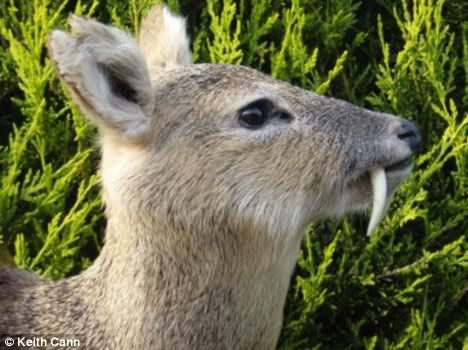 An increasing number of dog-owners in rural Bedfordshire are reporting attacks by Chinese water deer, whose ancestors escaped Woburn Safari Park.
 The UK is now estimated to be home to a quarter of the world's Chinese water deer population.