If you want to stand out on your wedding day, this dress made up of 2009 peacock feathers could be just the ticket.
The $1.5million creation was made at a wedding dress factory and took eight workers 40 days to sew together.
An average male peacock sheds around 200 feathers during his annual moult – meaning the makers would have had to have harvested the feathers from more than ten birds over the course of a year.
Source

This is a Zibellini, or Flea Fur
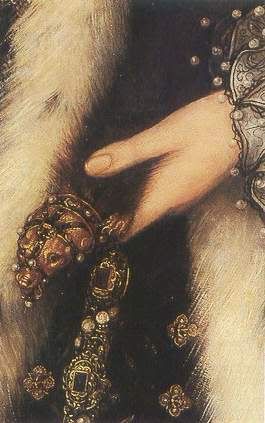
Zibellinis were a popular accessory item for noble men & ladies during the 15th and 16th centuries. A zibellino, from the Italian word for "sable", is the pelt of a sable or marten worn draped at the neck or hanging at the waist, or carried in the hand. The plural is zibellini.
Some zibellini were fitted with faces and paws of goldsmith's work with jeweled eyes and pearl earrings, while unadorned furs were also fashionable.
The traditional costume historian's term for this accessory,
flea-fur, is from the German
Flohpelz, coined by Wendelin Boeheim in 1894, who was the first to suggest that the furs were intended to attract fleas away from the body of the wearer. There is no historical evidence to support this unlikely claim. Italians simply called these accessories "zibellini", their word for sables, and speakers of other languages called them "martens", "sables" or "ermines" in their native tongues.

Zibellini was the entire pelt of an animal, usually marten or sable, but also ermine and lynx were used, and was carried in the hand, over the shoulder or around the neck, and was suspended from a gold chain attached to a girdle. The head and feet of which were often bejewelled replacements for the animals original body parts. There are accounts of clocks being set into the heads. Gold and silver were the norm for the head and feet of the Zibellini, but crystal and jet were also used. Zibellini were further embellished with diamonds, rubies, pearls and enamel work.
The fashion for carrying zibellini died out in the first years of the 17th century, although fox-pelts were worn in similar fashion in the 19th and 20th century. [
wiki]
(via
Scribal Terror)

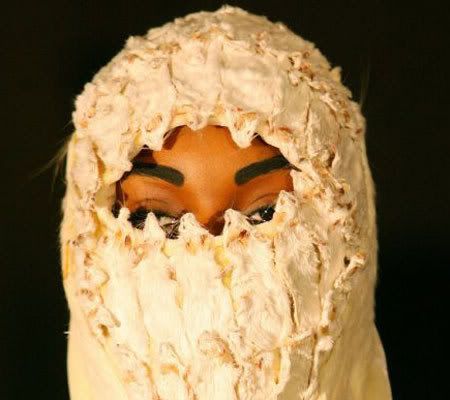
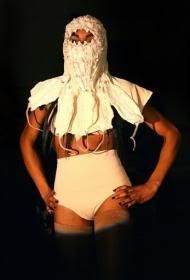
"I know not everybody likes mice and rats but they can be beautiful. I think the headdress is really cute," explained French designer Charlie Le Mindu, 22, who unveiled this creation during London Fashion Week.
Le Mindu’s mice and rat carcass headdress features real rodent bodies.

<------ Oh, and check out the perfect outfit to wear this creation with.
Would you wear this to the grocery store?
To church on Sunday?
How about open house at school?
So - tell me - where would YOU wear this outfit to?
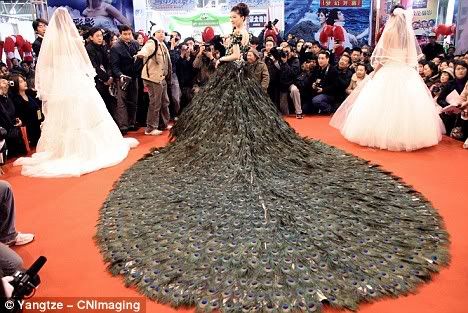 If you want to stand out on your wedding day, this dress made up of 2009 peacock feathers could be just the ticket.